Tomb Busters Salvage List: item types and safe extraction priorities
A Tomb Busters salvage list is useful only when it helps you decide what to carry, who should carry it, and when the run is already good enough to leave. This guide groups first-time finds, duplicates, bulky valuables, and risky pickups without pretending that one permanent price table survives every update.
This is an unofficial fan guide. Names, values, and unlock conditions can change, so compare the current in-game display with official update information before treating a detail as final.

Quick answer: secure first-time finds, then judge distance and risk
The first rule of a Tomb Busters salvage list is that not every pickup serves the same purpose. A first-time item may matter for Codex or collection progress, while a duplicate may be useful for a steady reward loop. Both can be worthwhile, but they should not be judged with the same question.
When you find an item for the first time, check the pickup message and the route home before committing. If nobody can explain the exit, the carrier is already isolated, or danger cues are repeating, the correct choice may be to leave it. Discovery is not always the same as completed progress; in many cases the safe extraction is the part that makes the run count.
A bulky or apparently valuable item also consumes team resources. The carrier may move more slowly, the light holder may have to stay close, and the rescue player may lose the freedom to scout another branch. If the group wants the pickup, fix the exit direction first, assign one carrier, and let the other players protect the return route instead of crowding around the object.
The official game framing treats Salvage as part of an active run, not a static treasure shelf. Movement, visibility, healing, and monster pressure can change after a pickup, so use this page as a decision list rather than a permanent price chart.
When unsure, secure one first-time item, prefer a nearby duplicate, postpone high risk, then check Codex and upgrades after extraction. Current in-game labels and official updates outrank older community lists.
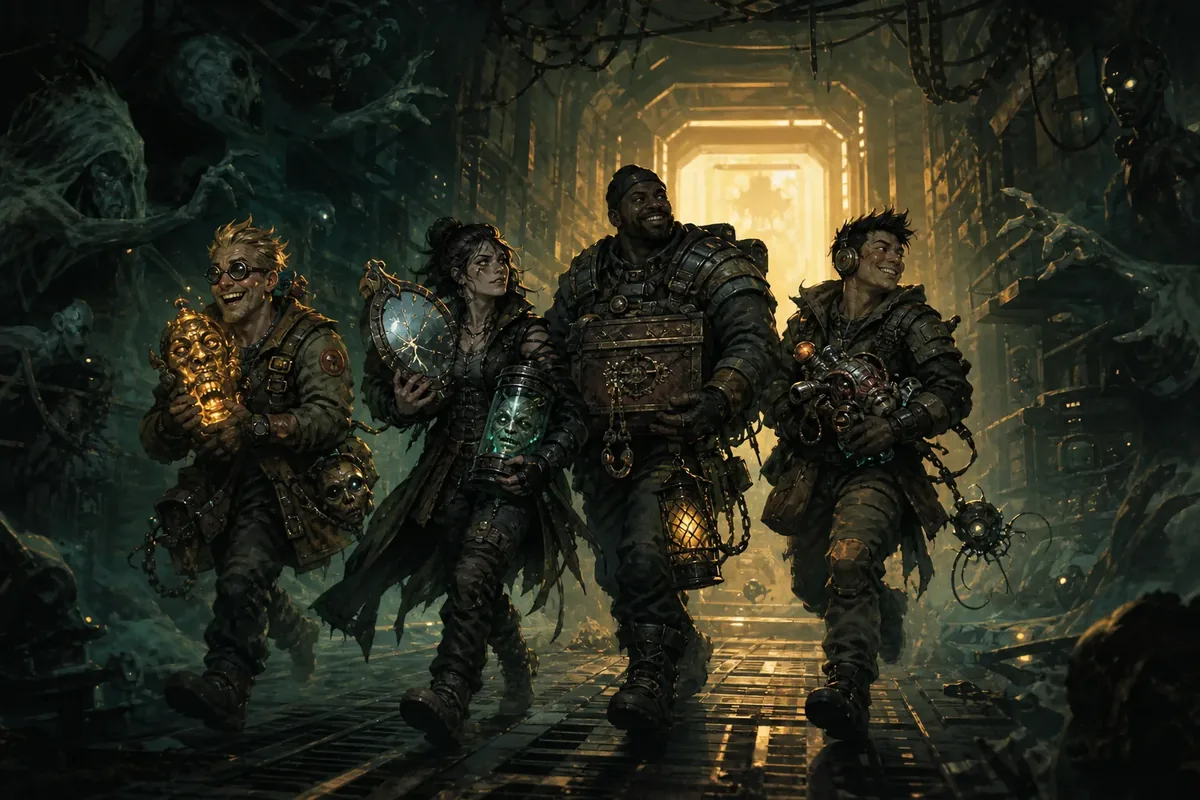
Tomb Busters salvage categories and priority
Use these categories as a practical checklist rather than as a fixed database of prices. The right priority depends on your current objective and the route you can actually survive.
| Category | Main purpose | Take it when | Avoid this decision |
|---|---|---|---|
| First-time or unregistered find | Codex and collection progress | The pickup is understood and the return route is clear | Going deeper just because it is new |
| Small item near the exit | Safe repeatable rewards | A short loop can be repeated without splitting | Adding detours to fill every slot |
| Bulky or high-value object | Higher reward per successful run | A carrier, escort, light, and fallback route are ready | Solo carrying or silent separation |
| Duplicate salvage | Stable farming and materials | A first-time item is already secured | Dropping an unregistered item for it |
| Event or update-related item | Limited progress or verification | The current condition is visible in-game | Treating an old list as current rules |
| Pickup in a danger zone | Experienced challenge runs | Healing, visibility, and rescue capacity remain | Chasing it with a broken return plan |
Four steps from finding salvage to extracting it
The names of objects may change, but a repeatable decision process stays useful. Follow the order instead of letting the most attractive object rewrite the whole run.
Identify the object and purpose
Decide whether the pickup is new, duplicated, or connected to a current objective. One player should say the purpose out loud so the whole group is not silently chasing different rewards.
- Read the pickup display
- Separate new from duplicate
- Choose one run objective
Choose a carrier and route roles
Give the object to one carrier, keep a light or scout role in front, and assign someone to read branches and the exit. The carrier should not also be responsible for every information call.
- Use one carrier
- Keep light coverage
- Agree on the exit call
Use the route you already know
After the pickup, do not test an unproven shortcut just to save a few seconds. Reverse the landmarks you already checked, call every branch, and regroup if a player cannot explain the exit direction.
- Reverse known landmarks
- Call before turning
- Skip the extra room
Check Codex and upgrades after extraction
Once the run is safe, check the Codex, collection progress, reward, or upgrade destination. If the result is missing, verify whether extraction was required and whether an update changed the display.
- Confirm the extraction result
- Check first-time registration
- Set the next run objective
Separate Codex progress, value, and duplicate salvage
A list of names is hard to use during a live run. Group each pickup by the decision it supports, then ask whether the route and team state make that decision safe right now.
First-time finds support progress
An unregistered object can matter even when its visible reward looks modest. If the return route is stable, secure it before a duplicate that only improves a short-term haul. The priority is the long-term information or collection result, not the flashiest object.
Bring one first-time find home before switching to pure farming.
Duplicates should be judged by distance
For a repeated pickup, use distance, size, visibility, and monster pressure instead of guessing from appearance. Several short successful loops usually beat one deep run that loses everything when the exit call fails.
Nearby, small, and clearly reversible is the best duplicate profile.
Bulky objects consume team resources
A large object changes more than the carrier's movement. It also uses escort attention, light coverage, rescue distance, and sometimes healing. A high reward can therefore have a lower practical return if the team cannot preserve its exit plan.
Treat bulky salvage as an experienced-team objective.
Event items need a freshness check
Items connected to an event or update should not be defined by one old community post. Compare the current in-game wording with the official site and store update notes. If the sources disagree, describe the uncertainty instead of inventing a permanent rule.
Use community observations as clues, not as final patch notes.

Common mistakes when using a salvage list
The most useful list is not the one that makes you pick up everything. It is the one that makes the skip decision quick enough to protect the run.
Treating a guessed price as permanent
An unfamiliar name or old value can change with an update. Do not turn an unverified number into a fixed database; prefer the current in-game display and official notes.
Continuing after the first-time find
After the collection goal is secured, opening more rooms can put the original progress at risk. Extract once, then create a fresh objective for the next run.
Clustering around the carrier
If everyone stands beside the item, nobody is checking the front, the back, or the next branch. Keep a readable formation and give each player a job.
Using an old guide as current rules
Names and behavior can shift. Official updates and the present in-game display should outrank an older community table, even when the older table looks more complete.
Picking one more object after the exit call
A late extra pickup quietly changes the run from extraction to exploration again. Once the group agrees to leave, protect that decision and test the next item on another run.
Official, update, and supporting references
Use first-party pages for game and update context; community lists are supporting references.
Tomb Busters official site
Official context for the game's supernatural extraction loop.
Open official siteApp Store update history
Public iOS update notes for Salvage and Codex context.
Check update notesTomb Busters Wiki Salvage category
Community reference; compare names with the current game.
Open the wikiRelated Supernatural Squad guides
Use route, equipment, pouch, and upgrade guides to complete the carry decision.
Salvage upgrade guide
Separate value, Codex, refining, and extraction priorities after you bring an item home.
Read the upgrade guideMap guide
Build a known exit loop before you extend a branch for another pickup.
Read the map guideEquipment guide
Match light, healing, movement, and capacity tools to the carrier and route roles.
Read the equipment guidePouch guide
Coordinate the carrier and the return call when a run contains more than one tempting item.
Read the pouch guideTomb Busters salvage list FAQ
Short answers to the questions that usually appear before a team commits to a pickup.
Check the current pickup display, Codex or collection screen, and first-party update information in that order. Community lists are useful supporting references, but they may not include every current name or condition.
If the route is safe, a first-time item often deserves priority because it may support Codex or collection progress. If the exit is unclear, danger is increasing, or the carrier is isolated, extraction safety comes first.
Assign one carrier, keep a light and route role nearby, and confirm that the team can reverse the known route. Judge distance, capacity, rescue options, and remaining healing together with the expected reward.
Do not assume that it does. Requirements can change, so check the post-extraction Codex or collection result and compare it with current in-game wording and official update notes if the entry does not appear.
No. It is an unofficial editorial guide. Treat the official site, current game display, and first-party update notes as the final reference, and use older articles or community reports as context only.
This page focuses on classifying a pickup, deciding who carries it, and choosing when to leave. The upgrade guide focuses on value, Codex, refining, and investment after extraction. Reading both keeps the two decisions separate.